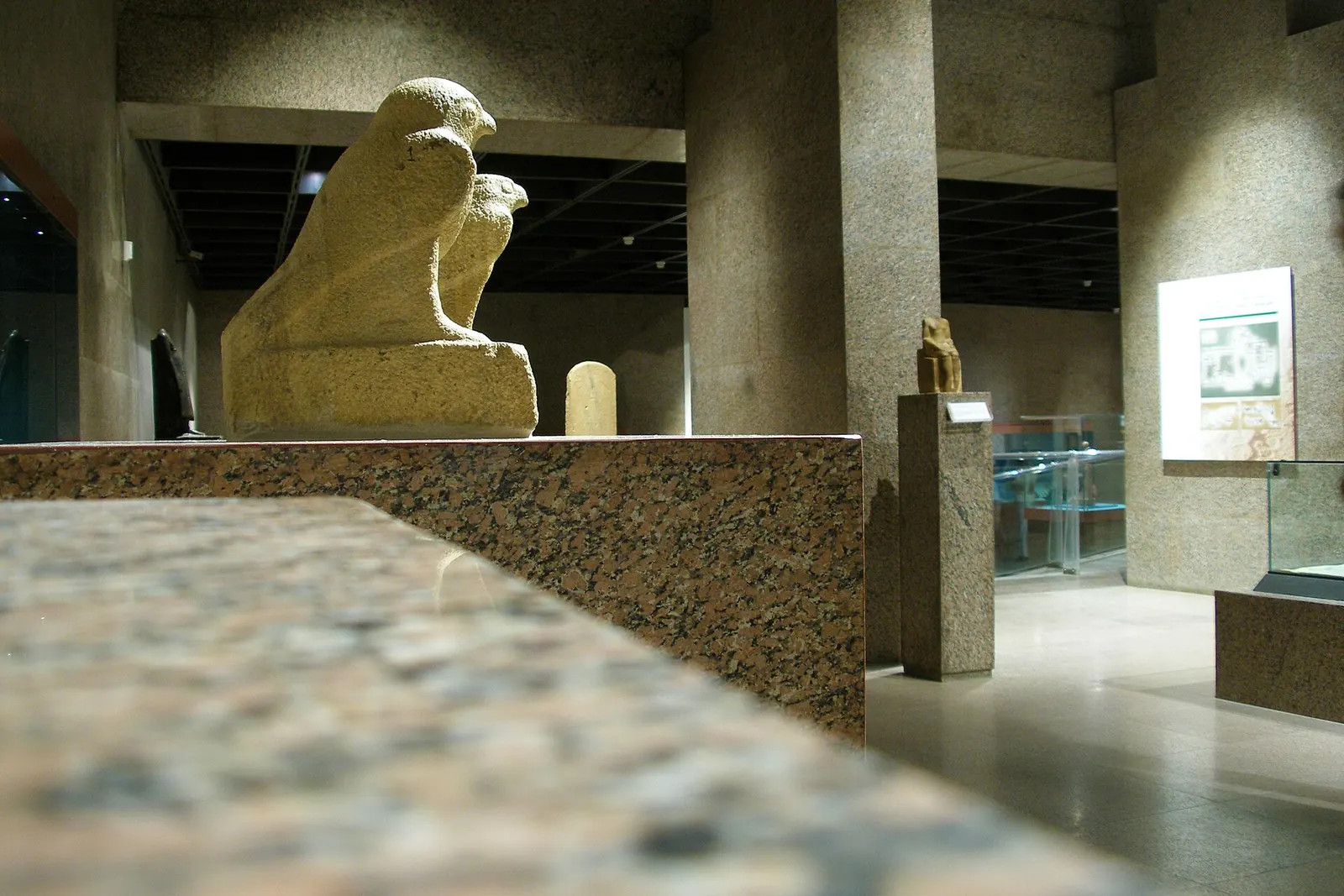
Choose the Nubian Museum when you want to understand the Nile valley south of Egypt’s conventional museum narrative and the human consequences behind twentieth-century archaeological rescue.
WHY CHOOSE IT
Choose a regional perspective.
The museum follows Nubian histories across what are now southern Egypt and northern Sudan. It resists treating the region only as ancient Egypt’s edge, connecting archaeological cultures, kingdoms, Christian and Islamic periods, domestic life and recent memory.
It is the strongest choice among these six for understanding how the Aswan High Dam, international heritage campaigns and community displacement belong to one transformed landscape.
A REALISTIC ROUTE
Move from map to object to memory.
Begin with geography: river, cataracts, modern border and the area affected by inundation. Next, follow one material such as pottery, textile or jewellery across periods. Then spend time with documentation of the UNESCO rescue campaign and ask what could be moved, what could only be recorded and what was lost as lived place.
End with recent cultural material rather than ending Nubian history in antiquity. “Traditional” should describe a documented practice, not imply that communities stopped changing.
WHAT IT EXPLAINS BEST
Preservation and loss at the same time.
Monuments and archaeological records were saved through extraordinary international work. Nubian settlements, agricultural landscapes and community routes were nevertheless submerged or transformed, and people were resettled. A useful visit does not let the success story erase the displacement story.
Models and archival photographs are therefore central evidence, not secondary decoration. They preserve relationships that individual museum objects cannot carry alone.
PRACTICAL LIMITS
The exterior is part of the visit.
Landscaped areas and local stone connect the museum to Aswan, but heat affects pace and some outdoor routes may close or change. Confirm garden access, shade, water rules, step-free paths and available seating.
Verify before travel
Check opening periods, garden access, photography policy, accessible circulation and available interpretation languages. Community history should be read alongside, not only through, institutional sources.