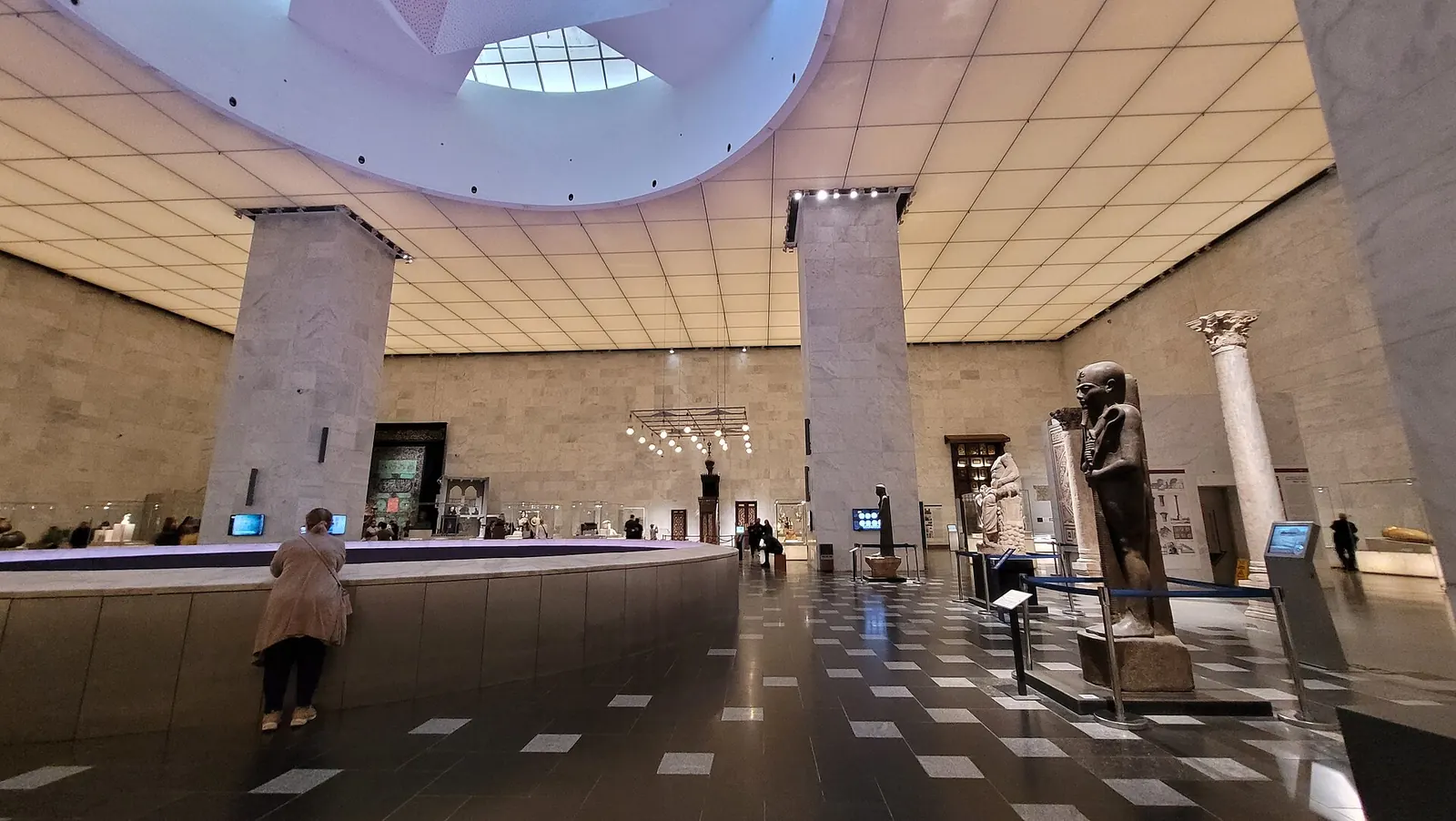
Choose NMEC when your question crosses periods: how Egyptians wrote, worked, dressed, believed or organized daily life over a very long chronology.
WHY CHOOSE IT
Choose connection over a single period.
NMEC places ancient, Coptic, Islamic, modern and contemporary material within a civilization narrative. This makes it a strong first museum for visitors who want orientation beyond pharaonic history, or a useful corrective after an archaeology-focused collection.
Thematic comparison is the strength and the interpretive challenge. Objects centuries apart can illuminate the persistence of a human activity, but the display should not be read as proof that culture remained unchanged.
A REALISTIC ROUTE
Follow one human activity.
Choose writing, craft, clothing, food or belief. Find three displays from different periods and compare material, maker, user and setting. Pause after the third and reconstruct the changes without looking at your notes.
Treat the Royal Mummies’ Hall as a separate choice. Human remains are not a mandatory highlight. Visitors may opt out for cultural, ethical or emotional reasons without missing the museum’s central chronological argument.
WHAT IT EXPLAINS BEST
Historical continuity—and its limits.
The museum is effective when it reveals how a material or practice changes while remaining recognizable. Keep geography and social difference in view: a national story inevitably selects from regional, religious and class experiences.
The Fustat setting adds context. The museum stands within a landscape important to the formation of Islamic Cairo and beside Ain Al-Sira, not in an abstract national space.
PRACTICAL LIMITS
Separate the main hall from sensitive display time.
Allow extra time if entering the mummies’ hall; do not bolt it onto an exhausted final ten minutes. Confirm restrictions, accessible routes, active temporary galleries and transport approach before leaving.
Verify before travel
Check current hall access, photography rules, opening period and accessibility through NMEC’s official information. Display policies around human remains deserve particular attention.