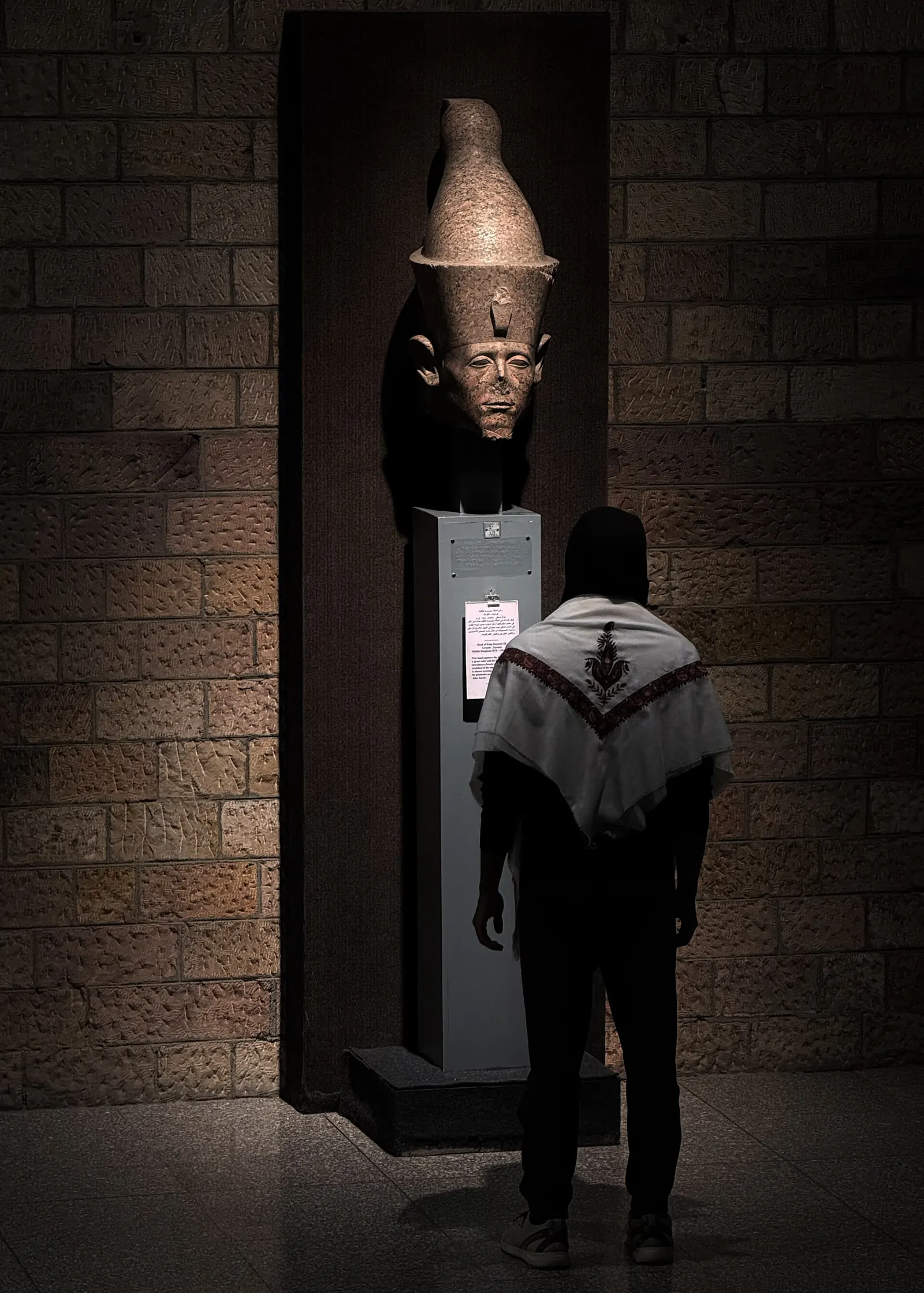
Choose Luxor Museum when you want fewer, strongly presented objects linked to the archaeological landscape around ancient Thebes. Its compactness should encourage deeper looking, not faster completion.
WHY CHOOSE IT
Choose selectivity.
Luxor Museum is not an encyclopedic replacement for Cairo or Giza collections. Its strength is regional context and deliberate display. Sculpture, relief and excavated groups receive enough space for visitors to see surface, support and scale.
It suits visitors tired by crowded sites or large museums, provided they resist treating a smaller building as a quick box to tick.
A REALISTIC ROUTE
Compare setting, material and light.
Choose one sculpture and view it from every permitted angle. Then find an object with a well-documented Theban findspot and reconstruct three locations: original ancient setting, place of discovery and current gallery. Finish by comparing two materials under the controlled lighting.
Keep a temple or tomb visited earlier in mind, but do not assume every object in the museum came from that site. “Luxor” names a modern city and a wider archaeological region, not one context.
WHAT IT EXPLAINS BEST
The value of archaeological proximity.
Material associated with Theban sites can be interpreted near the landscape where it was excavated. Documented groups, including discoveries from Luxor Temple, demonstrate why find context is more informative than a broad place name.
The display also teaches a museum lesson: spacing and light influence perceived importance. Ask what selection criteria produced the calm atmosphere.
PRACTICAL LIMITS
Evening access is not permanent.
Visitors often prefer a later visit after outdoor heat, but schedules can be seasonal. Verify last entry rather than assuming the museum stays open after sunset. Leave transfer time along the Corniche and confirm accessible circulation.
Verify before travel
Confirm current opening periods, last admission, object and gallery availability, photography policy and accessibility directly before travel.