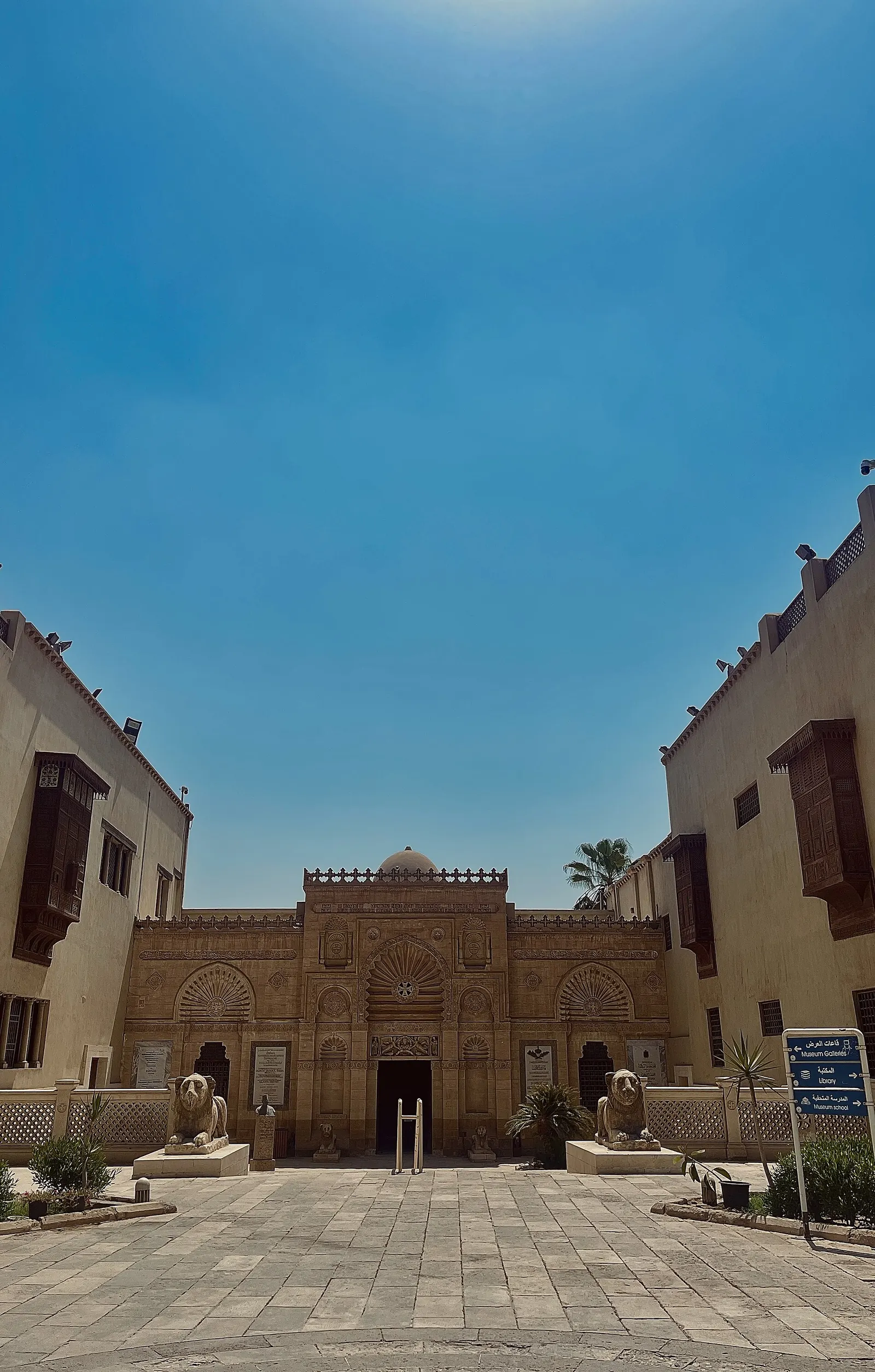
Choose the Coptic Museum when you want to follow materials—wood, stone, textile, manuscript and metal—across the centuries between familiar “ancient” and “Islamic” museum categories.
WHY CHOOSE IT
Choose materials and transitions.
The museum is especially strong for visitors interested in carved architectural fragments, decorated wood, textiles, manuscripts and the development of Christian visual culture in Egypt. Familiar motifs can continue while their setting and meaning change; comparison is more useful than a simple break between eras.
The historic building complex contributes ceilings, screens, courtyards and thresholds. It creates atmosphere but also requires a critical eye: revival architecture, reused elements and accessioned objects may resemble one another without sharing a date or origin.
A REALISTIC ROUTE
Follow three materials.
Begin with architecture before entering the first dense room. Then choose wood, stone and textile. With each, identify tool marks, surface loss, repair and original function. Finish with one manuscript page, giving it slower time than its size seems to demand.
This route avoids turning the museum into a chronology race. It also makes continuity visible without assuming an unchanged symbol or community across centuries.
WHAT IT EXPLAINS BEST
How objects move out of buildings.
Many collection objects once belonged to architectural, liturgical or domestic settings. Ask what was lost when a screen, capital or carved panel became a museum object, and what was preserved by the move. Provenance information matters more than visual similarity.
The museum also challenges the tendency to treat Christian Egypt as a short transitional chapter. Language, theology, trade and craft developed across a long and internally diverse history.
PRACTICAL LIMITS
The district needs its own plan.
Old Cairo includes active places of worship, security routes and uneven surfaces. Museum access and religious-site access are not interchangeable. Confirm step-free circulation inside the museum and allow extra time between the metro, entrance and any separate district visits.
Verify before travel
Check the active entrance, opening period, camera rules, room closures and accessible route. Low light may be intentional protection for manuscripts and textiles.